
Ketogenic Diet: Fad or Rad?
- Kayla Eichelberger

- May 10, 2021
- 2 min read
Updated: May 18, 2021
The ketogenic diet is overall more harmful and detrimental because of its long-term effects than it is beneficial and effective. This diet should not be used outside of a specific, medical context because it
has minimal scientific support.
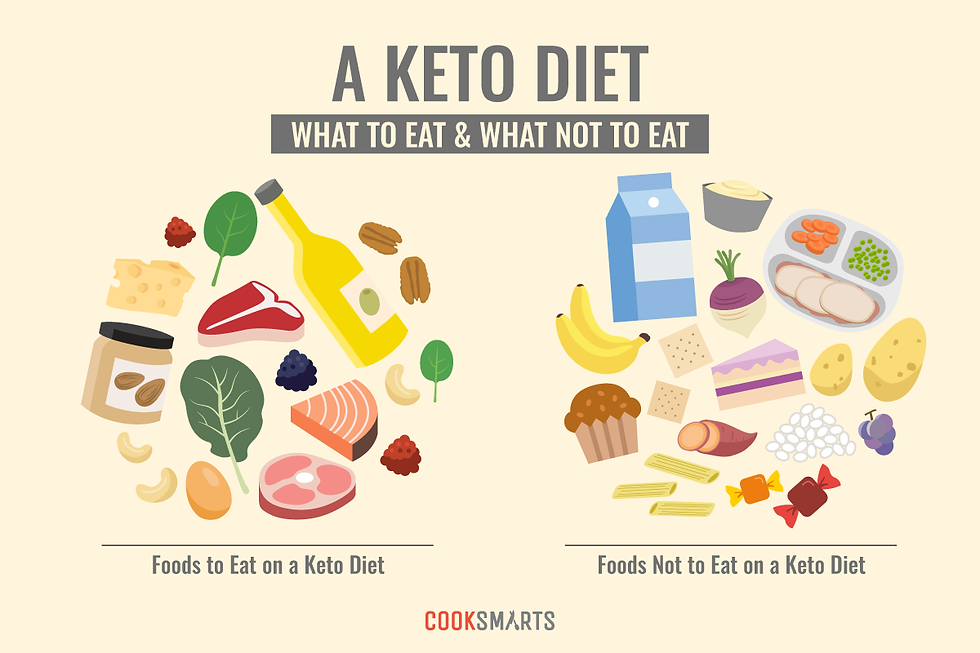
The most widely researched and applied version of the KD is the standard version where a person strives to have their total daily calories allocated between 5-10% carbohydrates, 70-80% fat, and 10-20% protein.
Even if someone sticks with the diet for only a few weeks, dangerous side effects can still occur. Within the first days to weeks of the ketogenic diet, people develop what is referred to as the keto flu. Dr. Jennifer Batch, who specializes in internal medicine at Orange Park Medical Center, describes the keto flu as a set of symptoms “including fatigue, headache, dizziness, nausea, vomiting, constipation, and low exercise tolerance” (Batch).

Dr. Wajeed Masood, who specializes in internal medicine at Methodist University, explains that the long-term side effects of the ketogenic diet include kidney stones, vitamin and mineral deficiencies, hypoproteinemia, or low protein levels in the blood, and hepatic steatosis, which is an increased buildup of fat in the liver (Masood 3). Additionally, vitamin and mineral deficiencies can place a person at a higher risk for developing cancer, diabetes, obesity, or cardiovascular disease.
For more information on the long-term side effects of the ketogenic diet, read this article: www.hsph.harvard.edu/nutritionsource/healthy-weight/diet-reviews/ketogenic-diet/
After the first year, the KD main benefits, such as weight loss and transient increases in the level of high density lipoproteins, plateaus and loses its effect whereas the consequences of the diet persist. Dr. Batch highlights that while the KD proves to be better at short-term weight loss compared to low-fat diets, the ketogenic diet’s statistical significance for weight loss after twelve months decreases and is often no better than other diets (Batch).
Additionally, the science is flimsy and unreliable. Studies that have researched the ketogenic diet have had short durations, small sample sizes, and no control groups, which contradicts the golden standards of scientific research. Plus, the results of these studies have not been consistently repeated, which makes it lack generalizability.
Check out these articles to read more on why evidence for the ketogenic diet is weak: https://www.ncbi.nlm.nih.gov/pmc/articles/PMC7480775/ https://academic.oup.com/jn/article/150/10/2835/5921004
For more information on the unknowns of the KD diet, read this article: https://www.ncbi.nlm.nih.gov/pmc/articles/PMC6251269/
In summary, this diet is dangerous, and you should not partake in the ketogenic diet unless you have a specific medical condition and prior approval from a certified medical professional.
Comments