
Lack of Access to Feminine Hygiene Products
- atrimbur
- May 12, 2021
- 2 min read
Feminine hygiene products are a necessity for any woman with a period. Although, if this is true, why are they priced as highly as they are?
The inequality of the women being able to afford these products is becoming more and more obvious. Although it may be difficult to find the resources, women and girls in need should be provided with feminine hygiene products to ensure that they can live a comfortable life.
Due to the cost of tampons and the amount of times a woman experiences her period, feminine hygiene products are a big expense. An average woman will experience her
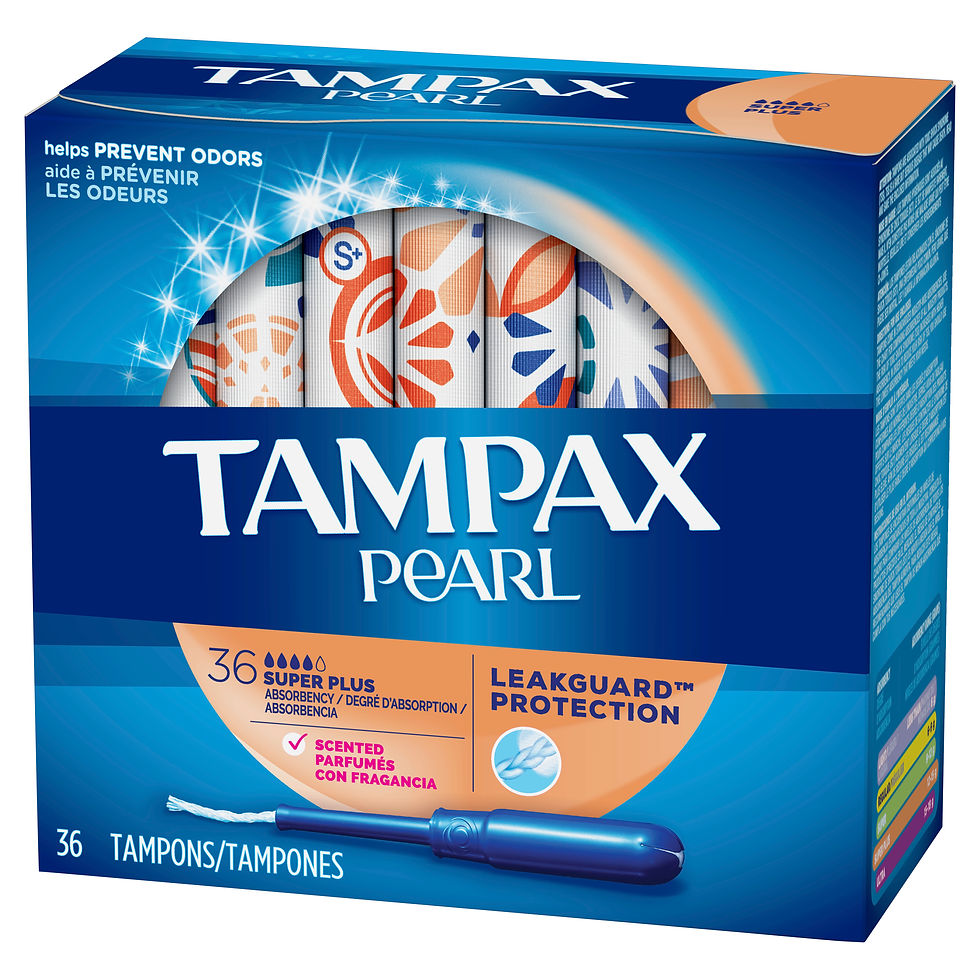
period for 38 years, 38 years of having to spend money every month to keep up with a normal and healthy bodily function. If you create another calculation, considering the average price of a box of 36 tampons is seven dollars, most women menstruating for 4.5 days, and the recommendation of changing a tampon every 6 hours, a woman will use 18 tampons per month. Therefore a woman will need to buy a new box of tampons every other month due to a typical box containing 36 tampons.
Many women resort to keeping tampons in for too long, risking infection, or using unsafe materials due to the cost of tampons. In order to manage their periods, women use products such as “rags, newspapers, and leaves” (Montano). There have also been reports of women using “toilet paper, socks, paper towels, or napkins” in public restrooms if there are no feminine products available (Montano). The improper use of tampons or pads or the use of unsanitary materials in place of tampons or pads can result in “several health problems, including high rates of cervical cancer, vaginal infections, toxic shock syndrome, and even infertility” (Montano). These are very dangerous implications for the improper use of these products, but women are forced to continue these actions because of the price of the products. This mostly impacts homeless women, incarcerated women, and women living in poverty.
Women’s health is being risked because of the high cost of feminine hygiene products and something must be done to change this. Many people are unaware of the severity of the effects from the high cost of these products and may help make a change if they have this knowledge. Informing others is only a beginning, but will ultimately begin the decrease of the cost of these products.
The process of making feminine hygiene products more accessible is a complicated process whether it involves removing the tax, providing the products to those in need, providing products in public restrooms, or making them free for all. But if there is action towards any of these goals, it is a step in the right direction.
Montano, Elizabeth. “The Bring Your Own Tampon Policy: Why Menstrual Hygiene Products Should Be Provided for Free in Restrooms.” University of Miami School of Law Institutional Repository, repository.law.miami.edu/umlr/vol73/iss1/10/.
Comments